


You’re not buying the product, you’re buying the feeling
You aren’t just buying those $130 Abrand jeans, you’re buying into the version that owns them. The “rich”, “clean and put-together” girl who is effortless with her outfits. These jeans are just the receipt for the transaction that was emotional and psychological.
Then vs. Now: A Brief History of Buying an Identity
This isn’t a new thing. Mall culture back in the 2000s ran the same logic. You weren’t just buying Abercrombie; you were buying into that group that shopped there. Magazines did it too, showing you a version of yourself you were meant to buy your way into. “It girl” branding worked because it wasn’t selling a product but instead selling proximity to someone whose life looked finished; a testament to the version of an “ideal” person that you could become.

I remember watching Victorious in the 2010s and being obsessed with Tori Vega. She was everything you could ever want as a tween girl. Popularity, prettiness, fitting in while somehow still being quirky and accepted. These “it girls” were pushed out on us from a young age, and that shapes how we consume even now. I wanted knee-high boots because that's all she wore in the show

Teen TV fed this too. Lizzie McGuire gave girls an inspiration to look up to and build an identity around. Buying the clothes she wore and becoming more like her. Mean Girls did this too, with a larger impact in the early 2000s.
You’re either buying for your future identity or buying to solidify your current one.
Why It Works On Us
All of this works on us because it’s meant to. It’s meant to be addictive, and built to never actually satisfy. The more you see something, the more you like it, regardless of whether it’s actually good. This is coined the “exposure effect”. No wonder an ad you scrolled past without a second thought starts to feel like a “want” by the fifth time you see it. Take the brand “Other Normal” as an example. Their ads started coming up on my For You page while scrolling, and after around the fifth time, I got intrigued and finally caved in and looked at their website. Slowly but surely, everyone around me was wearing their viral "signature pants”.
Scarcity plays into it too. When an item reads “sold out”, it gives the illusion of scarcity and makes you feel like buying it would make you part of the brand. Small brands know this. Look at Mr Winston with their limited drops. They know that producing a few hundred units can sell like it’s dropping a thousand. This is a marketing problem. It tells us, as the consumer, that other people have already decided this is worth having, which is a shortcut our brains take instead of actually asking whether you want the item. Buying the item is buying a ticket into the aesthetic.

Present bias, which is the tendency to overweight an immediate payoff against a cost that’s weeks away, means the hit of “I could look like that” lands now, while the bank balance consequence lands later, disconnected from the purchase that caused it.
Most of it happens below the level you’d notice. Researchers describe an “unconscious consumer”, which is a version of you making decisions shaped by cues you never consciously registered: the order products appear in, the colour of a sold-out tag, which influencer showed up right before you opened the app. The unsettling part isn’t total obliviousness, but the in-between state, feeling like you’re choosing freely while the choosing has already been nudged. We get the sensation of control without the actual thing.
More Choice is Less Satisfaction
There’s a version of this that has nothing to do with any single ad and everything to do with volume. Psychologist Barry Schwartz called it the paradox of choice: more options should make us freer, but past a certain point, they make us feel worse off. Infinite scroll is the paradox running at full speed. Every swipe is not another version of yourself on offer, which sounds like liberty and functions like exhaustion,
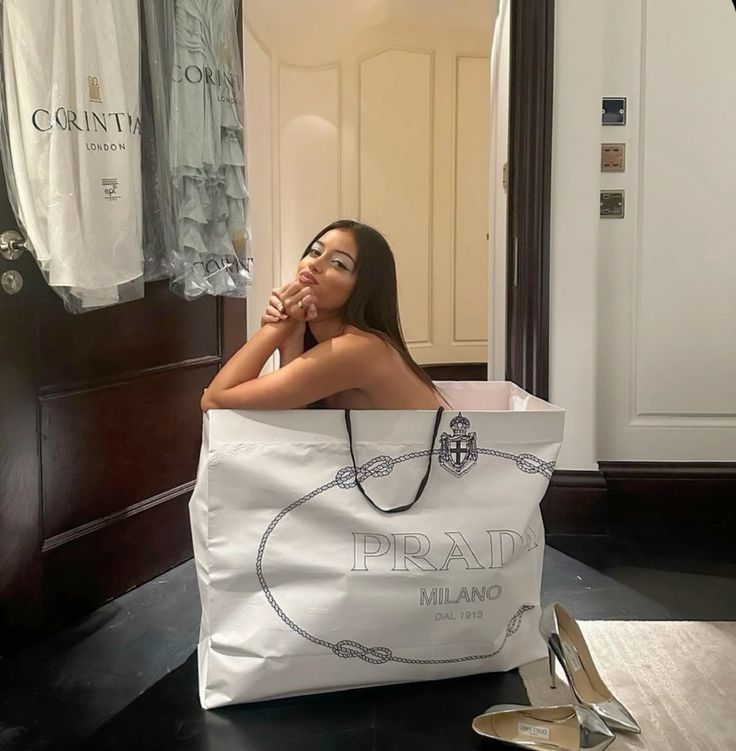
The mechanism is maximising. When there are multiple options and they feel endless, the instinct isn’t to pick something good enough, it’s to hold out for the best possible one. That’s a standard that is genuinely impossible to actually verify when there’s always another feed’s worth of options behind the one you’re looking at. That pattern doesn't stay in the shopping cart. The same logic gets applied to personal branding, to how curated an Instagram grid looks, to whether your “aesthetic” is coherent enough. Infinite choice colonises identity the same way it colonises consumption, because past a point they’re not separate categories at all.
The Irony: Anti-Consumption Becomes a Trend Too
Opting out of buying or consuming also becomes an aesthetic… When does it stop? “Frugal chic” is having a moment. Overconsumption is “out”. Except is it? Microtrends haven’t slowed down; they have just been rebranded.
Moral licensing is happening here. Doing something virtuous, for example thrifting, capsule wardrobes, “rewearing”, can make people feel like they’ve earned the right to consume elsewhere without the guilt. Buying good quality basics that cost $200 per top instead of buying $200 worth of Shein hauls feels like a step in the right direction, but it isn’t solving the root problem. The behaviour doesn’t have to actually change for the story about the behaviour to change. “I’m not like other overconsumers, I am frugal chic” can sit right alongside a cart that looks exactly like everyone else’s.

The same thing is happening with language. “Chic” used to mean stylish, elegant, effortless and fashionable. Now it's a microtrend where toast is chic, and people are rightly annoyed. When a status word gets applied to everything, it stops signalling anything at all. Chic keeps getting used anyway, because the appeal was never about precision but about being the one who gets to hand out the label. Chasing the whole status behind “chic” is its own microtrend, running parallel to whatever the word is supposed to be describing.
The Cost
Economist Richard Easterlin found something that should’ve put an end to this decades ago: as income rose across society over the last few generations, happiness didn’t rise with it. The gap between what we’re getting is where the real cost of identity lives.
Financial: A $40 top doesn’t seem so bad. I’ve bought plenty of $40 tops in my lifetime. However, overconsumption is a problem with the youth, and the majority of the youth are students, so it doesn’t sit well against the student budget. Present bias means that the purchase will be evaluated on its own. Anchoring compounds this: once your reference point for "a normal amount to spend on going out clothes" gets set by what you're seeing daily, spending below that line starts to feel like deprivation rather than default.
Environmental: If everyone around you has clothes that they want, you start to want them too. Microtrends move too fast for the clothes to survive them. An item designed to be relevant for six weeks doesn’t need to last past six weeks, and fast fashion supply chains are built to match that lifespan exactly.

Psychological: This is the real cost that never will be resolved on its own. The identity being sold to you through the perfect cut of a shirt, or the perfect fit of a pair of jeans, will never actually arrive, because it isn't a real destination; it's a moving target that resets the moment you reach it. Behavioural economists call this the hedonic treadmill: the enthusiasm, joy or happiness fade away quite quickly after purchasing a certain good because we are rapidly adapting to the new state of things almost immediately, and whatever we just acquired becomes the new baseline instead of staying an achievement. The satisfaction of any purchase gets measured against a reference point: what you had before, what you expected and then what you inherently got. That reference point keeps moving forward the second you purchase a new item to match whatever you just got. You’re never behind nor ever ahead. Chasing a fixed target eventually ends, but chasing a moving one is the business model. New trends come and they leave so you never stop wanting.
The Turn
None of this is an argument against wanting things, as wanting things is normal, and pretending otherwise is a performance (frugal chic). The actual problem is narrower and more specific: it's mistaking the item for the transformation. The jeans were never going to make you the person who owns them. That was always going to have to happen some other way, if it happens at all.

The algorithm doesn't know the difference between a want and a need, and it's not trying to. What it's wanting is your attention, and attention is easiest to hold with the promise of becoming someone else. This is a promise that works precisely because it never has to be kept. There isn't a version of the feed with fewer options that would fix this, and there isn't a purchase at the end of it that closes the loop. Knowing that doesn't make the pull disappear. But it does mean the next time something looks less like a product and more like a feeling, you at least know why.


Comments